Behringer C-1 Reviews: See Why 0 Shoppers Rated It 0 Stars!
From guitarists to DJs, 0 Soundfindr users reviewed the Behringer C-1 microphone. Check their takes on these Behringer microphones and decide for yourself.
 Supermod
  Moderator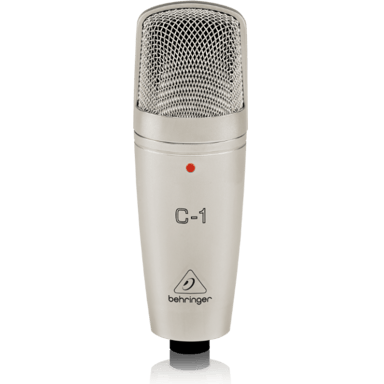
 Recaptor
 Behringer C-1 Review: Affordable Condenser Power for Creators and Musicians
The Behringer C-1 has built a quiet reputation over the years as one of those rare microphones that manages to balance price, performance, and practicality. Originally released in 2005, it’s not exactly new, but it remains surprisingly relevant for creators in 2025. Whether you're into recording vocals, podcasting, or even capturing acoustic instruments, the C-1 continues to stand tall as an accessible gateway into the world of condenser microphones.
At its core, this mic is a condenser with a cardioid polar pattern, designed to focus on what’s in front while rejecting background noise from the sides and rear. Add to that its XLR connectivity, 40 Hz–20 kHz frequency response, and solid metal body, and you’ve got a mic that feels purpose-built for serious use — even if the price suggests otherwise.
Detailed Specs & Features
From a technical standpoint, the Behringer C-1 is refreshingly straightforward. It’s powered by 48V phantom power, which means it plugs directly into any compatible audio interface, mixer, or preamp — just no USB plug-and-play convenience here. But that’s the trade-off for higher audio quality and balanced analog output.
Its small-diaphragm capsule and -33 dBV/Pa sensitivity make it responsive enough for both vocals and instruments. The mic handles up to 136 dB SPL, which is more than enough for loud sources like drums or guitar amps without distortion. Meanwhile, its 100-ohm output impedance keeps your signal clean over long cable runs.
There’s also a nice touch of practicality: an LED indicator that shows when phantom power is active — small but handy. Inside, the transformerless design helps reduce low-frequency hum and improve transient accuracy. It’s clear Behringer wanted to make a condenser mic that could punch well above its price class, and the numbers suggest they largely succeeded.
User Experience & Performance
Design & Build
The C-1’s design leans toward utilitarian rather than flashy, but that’s not a bad thing. The metal construction feels durable, with a reassuring weight of just under a pound. The matte silver finish and metal grill give it a professional look, while the internal foam damping helps reduce mechanical vibrations — an often-overlooked detail at this price point.
It’s designed for stand or clip mounting, and Behringer includes a few useful accessories like a mounting clip, carrying case, and protective foam insert. While it lacks luxuries like a shock mount or pop filter out of the box, the build quality compensates for it. It’s the kind of mic that feels right at home in a simple bedroom setup or a professional broadcast desk.
Performance
On paper, the Behringer C-1 should perform admirably across many recording contexts — and that’s what its specs suggest. The cardioid pattern captures clear, direct vocals while reducing off-axis noise, which is especially useful for untreated rooms. The frequency range of 40 Hz to 20 kHz ensures it can capture both warmth and brightness, without sounding overly colored or dull.
The pressure-gradient acoustic principle helps it maintain consistency even when the source moves slightly, making it forgiving for beginner users. Its phantom power support makes it compatible with any modern studio interface, and because it’s balanced, it resists noise interference better than cheaper USB microphones. What surprised me most is that it’s also quite resistant to RF interference — a small detail that can make a big difference in noisy environments.
Extra Features
There’s no gain control or onboard processing, no DSP or AI noise cancellation, and certainly no flashy smart assistant integration — but honestly, that’s not what the C-1 is about. It’s made for users who want clean, uncolored audio to shape in post-production. The simplicity actually becomes part of its appeal, especially for those stepping up from USB mics who want to learn the fundamentals of gain staging, mic placement, and EQ.
Pros & Cons
Pros
- Solid metal construction with good internal damping and corrosion resistance.
- Excellent value for money; professional-grade specs at an entry-level price.
- Handles high sound pressure levels (up to 136 dB SPL) with minimal distortion.
Cons
- Lacks built-in filters, gain control, or onboard tone shaping options.
- No included pop filter or shock mount, which may add to setup costs.
Price & Value for Money
Perhaps the most remarkable thing about the Behringer C-1 is its price tag — it currently retails for about $53.9 at Sweetwater.com. At that price, it’s hard to find another condenser microphone with similar specifications and build quality. The performance, while not on par with high-end studio mics, is far superior to what you’d expect from an entry-level product.
If you’re starting a home studio, recording voiceovers, or even streaming, the C-1 offers a massive step up in clarity compared to dynamic USB microphones. That said, professionals might eventually outgrow it — but as a learning tool and daily workhorse, it’s almost unbeatable in its price bracket.
Quick Take
The Behringer C-1 is a no-nonsense condenser mic that nails the basics: clean sound, rugged build, and consistent performance. It’s not fancy, but it’s functional in all the right ways. If your priority is reliability over frills, this one easily earns a spot on your short list.
Closing Recommendation
In short, the Behringer C-1 remains one of the best entry-level condensers for creators who care about sound quality but don’t want to spend hundreds. It’s not perfect — it skips onboard controls and modern digital extras — but for anyone learning to record with proper technique and gear, this mic delivers genuine studio character at an accessible price.
Verdict
Rating: Based on the specifications and overall feature set, we believe Behringer C-1 deserves 4.3 out of 5.
- Winner Feature → Outstanding build quality and clear sound for the price.
- Needs Improvement → Missing basic accessories like a pop filter and shock mount.
Reviews 0
The good, the bad, and the brutally honest.Average Rating


More Microphones 1229
Unlock more awesome finds.